Loading…
Loading…
Dual UK Honours Bachelor's Degree — Conferred jointly with Haverton University (UK) & Coventry University TNE Network (UK)

Coventry University (United Kingdom)
Online or on campus

A career-accelerated undergraduate curriculum covering modern software engineering, Kubernetes & cloud infrastructure, cybersecurity protocols, and distributed databases. Students earn 2 independent accredited diplomas with a 65% / 35% international credit split. BSc (Hons) Computer Science & Cloud Systems (Dual Award) is taught as one award, not a list of unrelated modules. The published length is 36 months, and the credit total is 360. Students move from Systems and interfaces through Systems and interfaces; Building and testing; Running the system; Technical project; Systems and interfaces (BSC-105); Building and testing (BSC-106), and finish on Systems and interfaces (BSC-305). Each course has a question, a method, and a submission. In this field, students specify a small system, show how it was tested, and state how it fails. Reading is a specification, a test note, and an incident or post-mortem. The artefact a marker expects is a specification or reviewed component with tests and a trade-off note. The award is built so that a graduate can do the following in practice: Dual degree transcripts issued with comprehensive credit mobility (UK FHEQ Level 6) Hands-on production labs with AWS, GCP, and Azure cloud computing credits Direct fast-track admission to Master's dual-award degrees upon graduation with 2:1 or higher Teaching assumes the student can read a source, attempt a problem before the seminar, and revise after feedback. Attendance at live seminars is part of the design. The capstone or final course must use the methods of the earlier courses; a project that ignores them does not pass. The pages for each course name the topics that are examined. Those topics are the syllabus. A brochure line is not a substitute for them.
Study online
Online tuition is free. Online examinations and certificates are 100% free and sponsored.
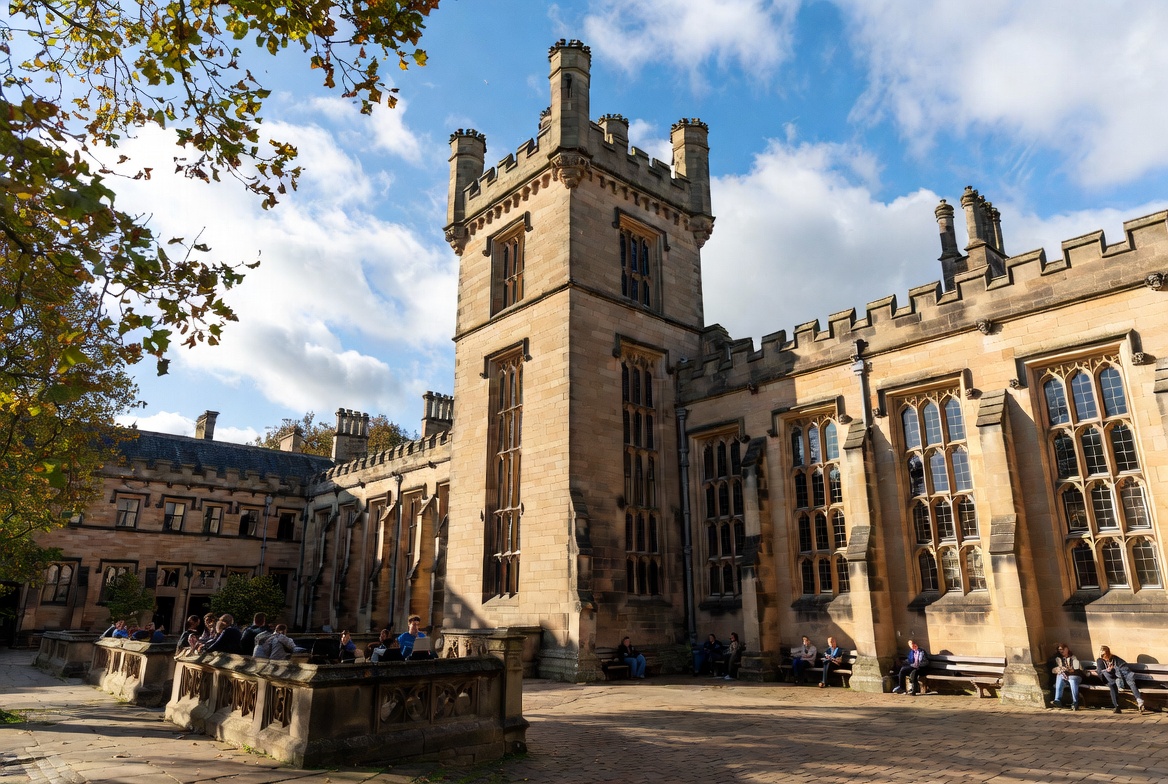
On-campus study
Prefer to learn at our London campus? Campus tuition is published on each programme page. All examinations are 100% free of charge.
| Code | Course | Credits · hours |
|---|---|---|
| BSC-D101 | Systems and interfaces Systems and interfaces (BSC-D101) is a course on BSc (Hons) Computer Science & Cloud Systems (Dual Award). It carries 45 credits and 450 notional learning hours, at 10 hours per credit. The course is taught at bachelor's level. Students learn the method on a guided case, then use it on a longer task with the sources named in the chapters. The chapters are the syllabus. Each chapter is a class of work this course assesses. Preparation is the reading, dataset, or case for that chapter. Seminar time is spent on the decision, the calculation, or the draft. The student revises after feedback. A pass requires the method named in the chapters, evidence a marker can check, and a stated limit on what the result does not show. Haverton University teaches this course on the published route for this degree.
| 45 · 450 h |
| BSC-D102 | Building and testing Building and testing (BSC-D102) is a course on BSc (Hons) Computer Science & Cloud Systems (Dual Award). It carries 45 credits and 450 notional learning hours, at 10 hours per credit. The course is taught at bachelor's level. Students learn the method on a guided case, then use it on a longer task with the sources named in the chapters. The chapters are the syllabus. Each chapter is a class of work this course assesses. Preparation is the reading, dataset, or case for that chapter. Seminar time is spent on the decision, the calculation, or the draft. The student revises after feedback. A pass requires the method named in the chapters, evidence a marker can check, and a stated limit on what the result does not show. Haverton University teaches this course on the published route for this degree.
| 45 · 450 h |
| BSC-D103 | Running the system Running the system (BSC-D103) is a course on BSc (Hons) Computer Science & Cloud Systems (Dual Award). It carries 45 credits and 450 notional learning hours, at 10 hours per credit. The course is taught at bachelor's level. Students learn the method on a guided case, then use it on a longer task with the sources named in the chapters. The chapters are the syllabus. Each chapter is a class of work this course assesses. Preparation is the reading, dataset, or case for that chapter. Seminar time is spent on the decision, the calculation, or the draft. The student revises after feedback. A pass requires the method named in the chapters, evidence a marker can check, and a stated limit on what the result does not show. Haverton University teaches this course on the published route for this degree.
| 45 · 450 h |
| BSCD181 | Programming and testing Programming and testing (BSCD181) is a course on BSc (Hons) Computer Science & Cloud Systems (Dual Award). It carries 45 credits and 450 notional learning hours, at 10 hours per credit. The course is taught at bachelor's level. Students learn the method on a guided case, then use it on a longer task with the sources named in the chapters. The chapters are the syllabus. Each chapter is a class of work this course assesses. Preparation is the reading, dataset, or case for that chapter. Seminar time is spent on the decision, the calculation, or the draft. The student revises after feedback. A pass requires the method named in the chapters, evidence a marker can check, and a stated limit on what the result does not show. Haverton University teaches this course on the published route for this degree.
| 45 · 450 h |
| BSCD182 | Data structures and a small program Data structures and a small program (BSCD182) is a course on BSc (Hons) Computer Science & Cloud Systems (Dual Award). It carries 45 credits and 450 notional learning hours, at 10 hours per credit. The course is taught at bachelor's level. Students learn the method on a guided case, then use it on a longer task with the sources named in the chapters. The chapters are the syllabus. Each chapter is a class of work this course assesses. Preparation is the reading, dataset, or case for that chapter. Seminar time is spent on the decision, the calculation, or the draft. The student revises after feedback. A pass requires the method named in the chapters, evidence a marker can check, and a stated limit on what the result does not show. Haverton University teaches this course on the published route for this degree.
| 45 · 450 h |
| BSCD183 | Databases and queries Databases and queries (BSCD183) is a course on BSc (Hons) Computer Science & Cloud Systems (Dual Award). It carries 45 credits and 450 notional learning hours, at 10 hours per credit. The course is taught at bachelor's level. Students learn the method on a guided case, then use it on a longer task with the sources named in the chapters. The chapters are the syllabus. Each chapter is a class of work this course assesses. Preparation is the reading, dataset, or case for that chapter. Seminar time is spent on the decision, the calculation, or the draft. The student revises after feedback. A pass requires the method named in the chapters, evidence a marker can check, and a stated limit on what the result does not show. Haverton University teaches this course on the published route for this degree.
| 45 · 450 h |
| Code | Course | Credits · hours |
|---|---|---|
| BSC-D201 | Technical project Technical project (BSC-D201) is a course on BSc (Hons) Computer Science & Cloud Systems (Dual Award). It carries 45 credits and 450 notional learning hours, at 10 hours per credit. The course is taught at bachelor's level. Students learn the method on a guided case, then use it on a longer task with the sources named in the chapters. The chapters are the syllabus. Each chapter is a class of work this course assesses. Preparation is the reading, dataset, or case for that chapter. Seminar time is spent on the decision, the calculation, or the draft. The student revises after feedback. A pass requires the method named in the chapters, evidence a marker can check, and a stated limit on what the result does not show. Haverton University teaches this course on the published route for this degree.
| 45 · 450 h |
| BSC-D202 | Systems and interfaces Systems and interfaces (BSC-D202) is a course on BSc (Hons) Computer Science & Cloud Systems (Dual Award). It carries 45 credits and 450 notional learning hours, at 10 hours per credit. The course is taught at bachelor's level. Students learn the method on a guided case, then use it on a longer task with the sources named in the chapters. The chapters are the syllabus. Each chapter is a class of work this course assesses. Preparation is the reading, dataset, or case for that chapter. Seminar time is spent on the decision, the calculation, or the draft. The student revises after feedback. A pass requires the method named in the chapters, evidence a marker can check, and a stated limit on what the result does not show. Haverton University teaches this course on the published route for this degree.
| 45 · 450 h |
Modules are assessed through a published mix of coursework, applied projects, and examinations. Exam windows are announced in advance so students in other time zones are not forced into overnight sittings. Alternative arrangements are available where documented.
The published duration is 36 months. Teaching language: English. Actual time-to-complete depends on mode and any recognised prior learning.
You may study this award fully online from your country, or — where published — on campus at Haverton. Online study does not require a student visa. Campus study may.
Degree tuition for this award is published as £0 / tuition-free on the online pathway. All online degree examinations and certificates are 100% free and sponsored — the only cost for online study is the application fee. Campus tuition and campus examinations are charged separately. Check the Fees page for details.
Requirements are grouped on this page (academic, English, documents). Equivalent qualifications are considered. English may be waived after prior English-medium study.
Assessment is typically a mix of coursework, projects, and examinations. Doctoral awards include a thesis or dissertation and an oral examination. Details sit in the programme specification and module outlines.
Recognition of the award for local employment, professional licence, or ministry attestation is decided by your employer or regulator. Haverton University publishes verification pages for certificates. We do not claim automatic equivalence in every country.
Start an application on this website. Progress is saved from the first step. Admissions: admissions@haverton.org.
Recognised & Accredited